BlackRock, Carhartt, Ford and Google Launch Skilled Trades Alliance as 2.1 Million Jobs Could Go Unfilled
A new alliance from BlackRock, Carhartt, Ford and Google makes skilled-trades training a current careers story with direct relevance for women entering nontraditional work.
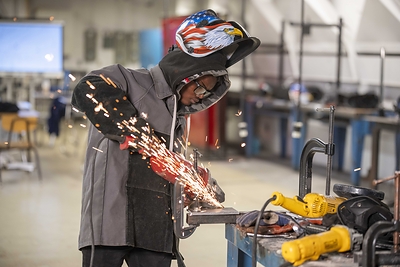
BlackRock, Carhartt, Ford Motor Company and Google have launched the Alliance for America's Skilled Trades, a new coalition focused on expanding access to skilled-trades training and addressing a projected labor shortage in infrastructure, energy, manufacturing and related fields. The July 21 announcement says the founding members have already independently committed to supporting skilled workforce training initiatives in 30 states.
The headline number is large. The companies say an estimated 2.1 million skilled-trades positions could go unfilled by 2030, including jobs for electrical workers, technicians and builders. Same-day coverage from leaders at the founding organizations also points to shortages including additional electrical workers by 2030 and hundreds of thousands of auto technicians by 2029. Those projections are company-cited, but they reflect a familiar problem across U.S. workforce planning: demand for physical infrastructure is rising while training routes remain uneven.
For SheMeansNews readers, the women-in-work angle is not an afterthought. Carhartt's own recent press-release archive shows a long-running focus on women in the skilled trades, including prior grants and women's workwear initiatives. The new alliance is broader than women alone, but any serious effort to fill millions of trade roles will have to reach women who have historically been underrepresented in many technical, construction, electrical, automotive and industrial pathways.
The alliance says it will focus on three areas. First, it wants to build the trades pipeline by raising awareness and making pathways into the trades clearer. Second, it plans to scale evidence-based workforce development, including apprenticeships and pre-apprenticeships that let workers earn while they learn. Third, it intends to expand participation to industry, labor, education and nonprofit partners. The release also says the alliance will work with Burning Glass and Jobs for the Future on a report to measure gaps, track progress and share best practices.
That design matters because career advice is often biased toward four-year degrees, even for people who want stable work with benefits and room for advancement. The announcement argues that infrastructure-related skilled trades can offer above-average wages, retirement savings and health care without requiring the cost of a four-year college degree. For women balancing tuition costs, care responsibilities, career changes or interrupted work histories, paid training pathways can be especially important.
The leadership list is notable too. Linda Hubbard, president and chief executive of Carhartt, and Ruth Porat, president and chief investment officer of Alphabet and Google, are among the executives quoted in the announcement. Their presence does not make the alliance a women's program, but it does put senior women executives into a national workforce conversation often dominated by male-coded images of labor and infrastructure.
The risk is that awareness campaigns can stop at branding. Women do not enter and stay in trades because companies say the door is open. They need training slots, safe worksites, equipment that fits, harassment prevention, predictable schedules, child-care-aware program design, wage transparency and visible advancement into supervisory roles. If the alliance wants to expand the labor pool, it will need to treat inclusion as operational design, not merely outreach.
The immediate news is the launch. The longer test is whether the alliance can convert national concern about labor shortages into local training routes that women can actually enter, complete and use to build durable careers.
Stay close to the story
Subscribe to the newsletter
One edition a week from the SheMeansNews desk.