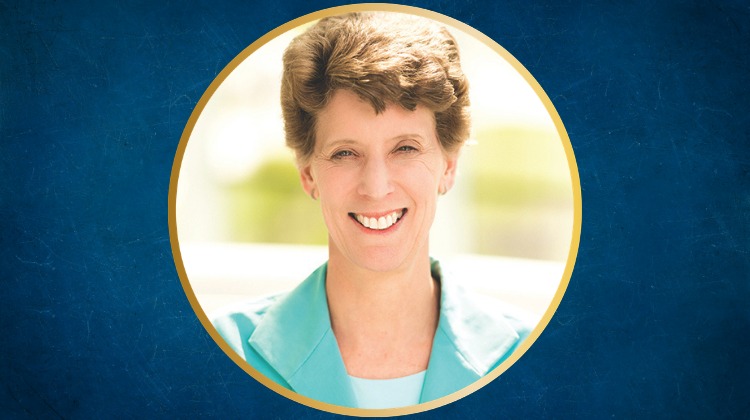
Sally Morton Named Top Women Leader in Education for Statistics and Policy Career
Sally Morton has been named one of the top women leaders in education for 2026 by Women We Admire, recognition that puts a statistics and policy career inside the wider conversation about who shapes modern education.
Sally Morton has been named one of the top women leaders in education for 2026 by Women We Admire, recognition that puts a statistics and policy career inside the wider conversation about who shapes modern education.
Amstat News reported the recognition on 3 August, noting that Women We Admire named Morton, an American Statistical Association founder and fellow, among its top women leaders in education. The organization frames education leadership broadly, saying the work no longer fits inside one institution or one role. That matters in Morton's case because her career has moved across universities, research organizations, public policy and professional statistics.
Morton serves as executive vice president at Arizona State University, where she oversees institutes and initiatives. She also holds professorships in mathematical and statistical sciences and in the College of Health Solutions, along with the Florence Ely Nelson Chair. Her past roles include dean of Virginia Tech's College of Science, chair of biostatistics at the University of Pittsburgh, vice president of statistics and epidemiology at RTI International, and head of the RAND Corporation Statistics Group. She is a member of the National Academy of Medicine, served as ASA president in 2009 and chaired Section U of the American Association for the Advancement of Science in 2013.
For SheMeansNews, the story belongs in education because it shows how data expertise has become part of institutional leadership. Statistics is no longer a narrow technical service that appears after decisions are made. It shapes how universities evaluate outcomes, how public agencies understand risk, how health systems review evidence and how policy teams decide whether an intervention is working. Leaders who can move between statistical methods, research governance and institutional strategy are increasingly important.
Morton's recognition also points to a broader issue for women in education leadership. Many leadership lists still focus on presidents, superintendents or public-facing founders. Those roles matter, but they do not capture the full ecosystem. Education is also shaped by people who build research standards, train quantitative thinkers, design evidence systems, run institutes and connect universities to national policy. Morton's career sits in that space, where decisions can influence many classrooms and research programs without always looking like a traditional education headline.
The policy dimension is especially relevant. Statistical leadership affects how society measures health outcomes, education results, social programs and scientific uncertainty. Bad measurement can produce bad policy, and weak data literacy can leave institutions vulnerable to overconfident claims. A leader with Morton's background brings a different kind of authority to education: the ability to ask what evidence means, what it leaves out and how decisions should change when the evidence is incomplete.
Women We Admire describes itself as a member-led organization connecting women leaders in business, technology, finance, law, medicine and other fields. Its inclusion of Morton in an education list is a reminder that the modern education sector is not confined to schools. It reaches research labs, public-health systems, government advisory rooms and nonprofit institutions. For young women considering statistics, data science or research careers, that is a useful signal. Technical expertise can become leadership, and leadership can look like building better ways for institutions to know what is true.
Stay close to the story
Subscribe to the newsletter
One edition a week from the SheMeansNews desk.