She Did That's Founder Forum Shows Why Black Women Entrepreneurs Still Need Their Own Rooms
The Brooklyn Founder Forum gathered Black women entrepreneurs around ownership, protection, burnout and community, turning founder support into a practical room.
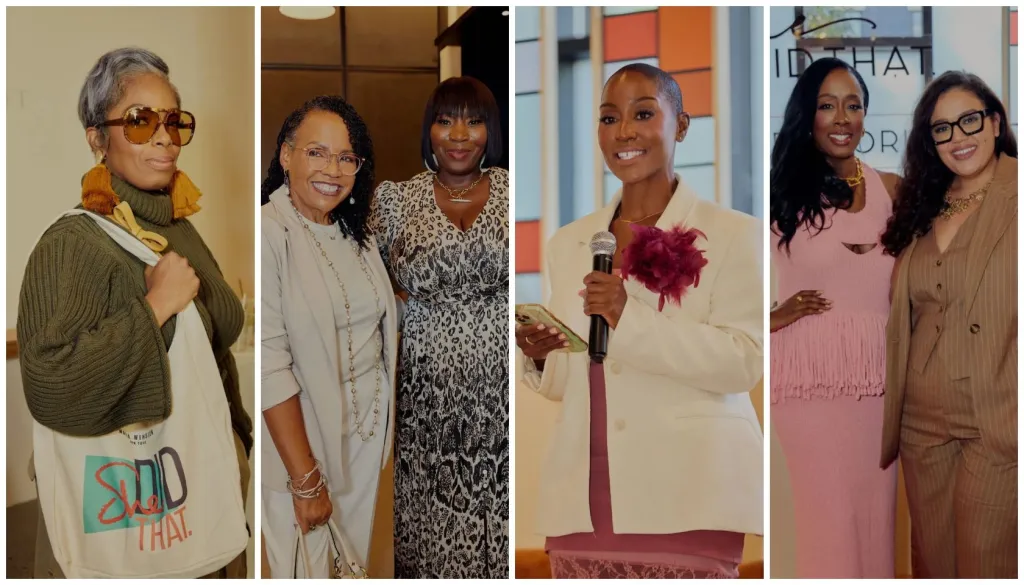
She Did That's inaugural Founder Forum has given Black women entrepreneurs a room built around the parts of business building that rarely fit neatly into pitch decks: ownership, protection, burnout, community and the need to be understood by people who have lived the work.
The Brooklyn gathering, created in service of Black women entrepreneurs, brought together founders, advisers and operators for panels and networking. The speaker mix included women speaking from experience rather than theory, with conversations on life after the 9-to-5, protecting brands and ideas, building a health and wellness business without burning out, and the complicated path through acquisitions, exits and ownership.
That range is important. Entrepreneurship coverage often treats women founders as if their main problem is visibility. Visibility matters, but it is not the whole operating system. A founder also needs legal protection, peer knowledge, practical customer insight, emotional stamina and a place to ask questions without performing certainty.
The forum's strongest signal was the attention to founder community as business infrastructure. Lisa Price, founder and president of Carol's Daughter, reflected on what it meant to build without the kind of community that now exists online and in organised rooms. Necole Kane, founder of My Happy Flo and the woman behind xoNecole, described She Did That's spaces as rooms where the founder is treated as the central figure.
For SheMeansNews readers, that is the business lesson. A room can be more than an event if it lowers the cost of learning. Founders often lose time because every lesson has to be learned alone: how to protect intellectual property, how to price a service, how to evaluate an acquisition offer, how to decide whether a business is asking too much of its owner. A strong founder room compresses that learning curve.
The Black women entrepreneur angle also deserves to be named directly. Generic startup rooms do not always make space for the layered reality of building while navigating race, gender, capital access, family responsibility, beauty standards, health expectations and cultural representation. A room curated for Black women founders can surface trade-offs that may stay invisible elsewhere.
The forum did not need to claim that community solves capital barriers or makes every business sustainable. It does something more grounded: it shows how founders can move through the work with better information, stronger examples and fewer isolated decisions.
There is also a media lesson here. Founder stories are often told only at the moment of launch, funding or exit. The Founder Forum points to the middle of the story, where operators are making decisions about legal structures, brand identity, health, cash flow, partnerships and whether to keep going.
That middle is where many businesses are actually made. It is less cinematic than a launch announcement, but it is where founders need the most honest rooms. She Did That's first Founder Forum appears to have built one around the people most likely to use it well.
Stay close to the story
Subscribe to the newsletter
One edition a week from the SheMeansNews desk.