Efrat Rapoport's June Raises $20 Million to Automate Enterprise AI Deployment
Efrat Rapoport's new company June has emerged from stealth with $20 million in pre-seed funding, putting a woman co-founder at the center of one of the current enterprise AI questions: how companies turn agent promises into working systems.
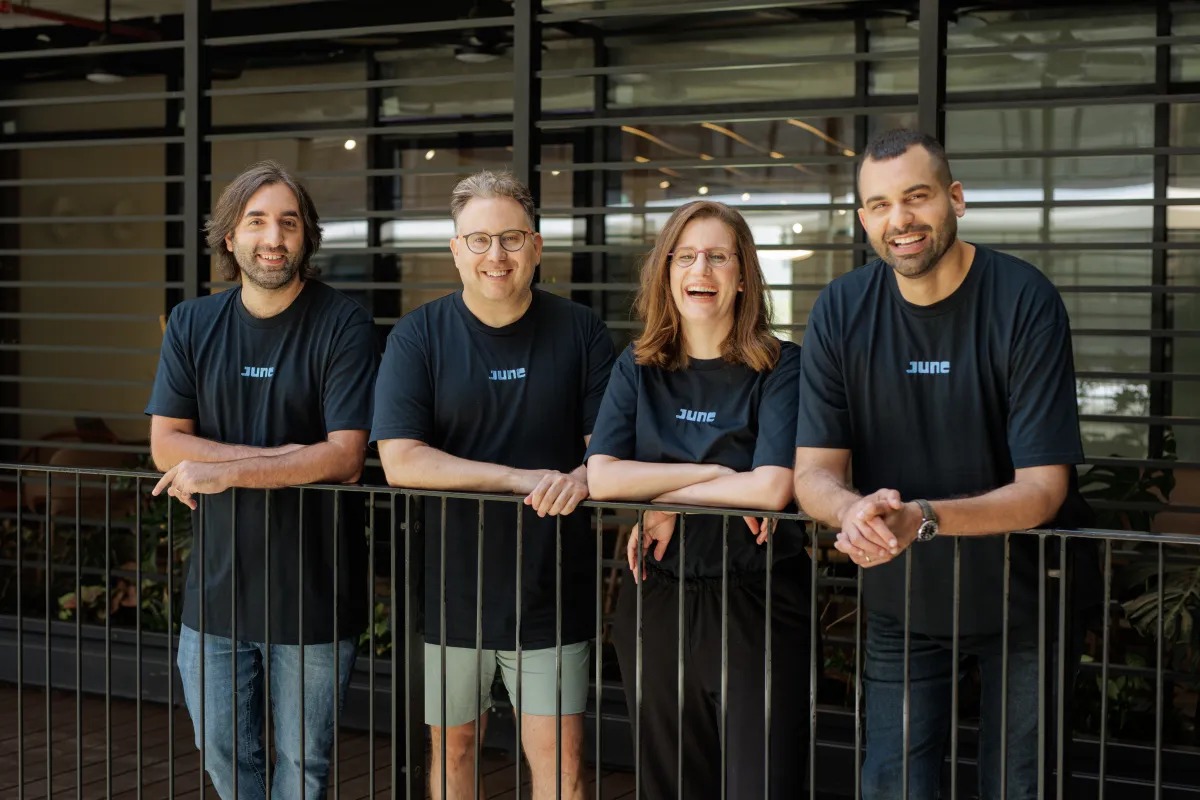
Efrat Rapoport's new company June has emerged from stealth with $20 million in pre-seed funding, putting a woman co-founder at the center of one of the current enterprise AI questions: how companies turn agent promises into working systems.
TechCrunch reported on 3 August that June raised the round from Marc Benioff's Time Ventures, with additional backing from Michael Dell, Aaron Levie and George Kurtz. The company declined to share a valuation. Rapoport, a former Salesforce executive, founded June with Ohad Hen, Barak Goldstein and Idan Tsitiat. The same team previously built Bonobo AI, a pre-transformer language-model company focused on voice-to-text service, and sold it to Salesforce in 2019.
The news is not only another AI financing headline. June is trying to solve a practical enterprise bottleneck. Large companies may want AI agents, automated workflows and better data tools, but those projects still have to connect with older systems such as Salesforce, ServiceNow, Databricks, Workday, Oracle and SAP. Rapoport told TechCrunch that legacy systems, duplicate fields, fragmented data and technical debt remain the hard part. June's own site frames the product as a way to deliver enterprise systems, AI agents and data platforms with less delay.
For SheMeansNews readers, the founder angle is important because Rapoport is building from operating experience rather than a thin AI pitch. She has already been through a startup sale, then worked inside Salesforce on AI initiatives before returning to company-building. That path gives her a view of both sides of the market: the founders selling transformation and the enterprise customers trying to make it work without breaking existing operations.
The round also says something about the current investor appetite for AI services. Many startups promise to replace work with software. June is taking a more grounded position: before AI can produce value, someone has to map how work already happens. That is a less glamorous but more defensible thesis. In large organizations, the cost of a failed system change is not just a bad demo. It can be missed revenue, compliance exposure, confused staff and frustrated customers.
There is a careers angle as well. If June's model works, it could change the role of consultants, administrators and implementation teams rather than simply removing them. The company says a real human expert remains available when a hard change needs review or handoff. That makes the product less like a pure replacement tool and more like an attempt to compress the time between business need, system design, testing and adoption.
The funding market is crowded, and not every AI deployment company will survive the next correction. June still has to prove that its software can handle messy customer environments and not merely explain them. But the size and quality of the pre-seed round show that investors are willing to back repeat founders who understand the unglamorous implementation layer. Rapoport's story is a useful reminder that many of the most valuable AI companies may be built by people who know where enterprise work actually gets stuck.
Stay close to the story
Subscribe to the newsletter
One edition a week from the SheMeansNews desk.