Franziska Kirschner's Intropy Raises $11 Million for AI Spare Parts Platform
Felix Capital led the London company's seed round to build an AI-native operating system for an unglamorous but vast spare parts industry.
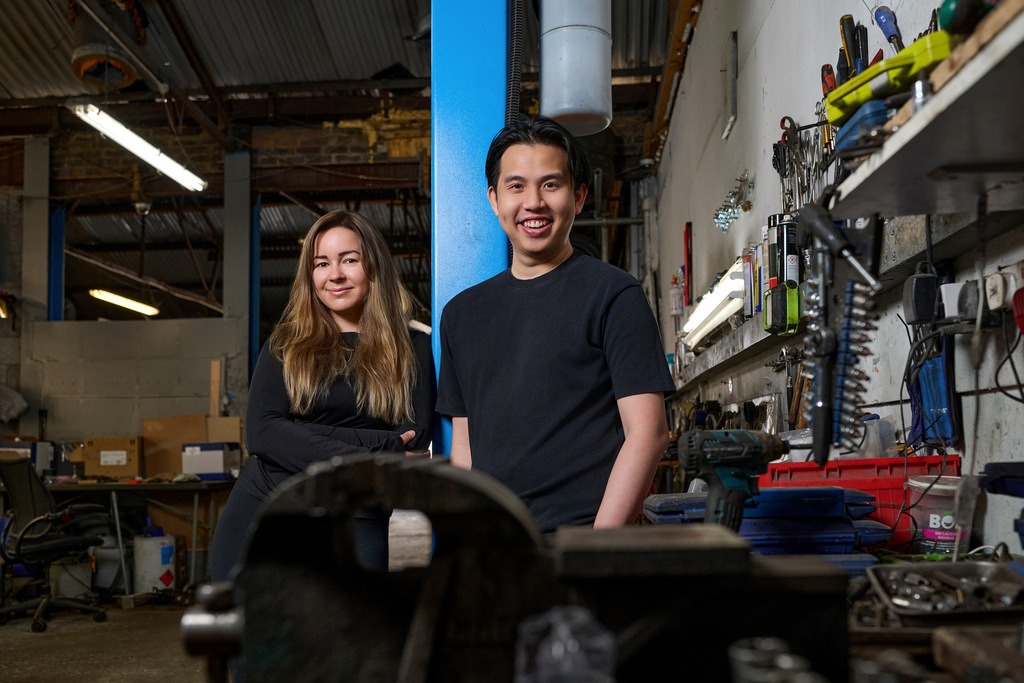
London startup Intropy has raised 11 million dollars in seed funding to build what it calls an AI-native operating system for the spare parts industry. The company announced the round on 31 July, with Felix Capital leading and Quiet Capital, General Catalyst and firstminute capital also participating. Intropy was founded in 2024 by Franziska Kirschner and YihKai Teh, and the company says it helps distributors, manufacturers and recyclers automate inventory, pricing, obsolescence and other operational decisions that still depend heavily on manual reviews and legacy software.
Kirschner is the founder focus for SheMeansNews. Intropy's own about page says she is a University of Oxford-trained physicist whose research has been published in Nature and that she moved into applied AI at Tractable before co-founding Intropy. The company says she and Teh developed their understanding of the spare parts sector while working together on automotive AI, where they became inventors on more than 10 patents applying AI to the sector. That background gives the funding story more substance than a generic AI announcement.
The market Intropy is targeting is unglamorous but large. The company says more than 4 billion dollars in automotive spare parts are transacted every day. It argues that many businesses still make critical calls about what to stock, where to hold it, when to adjust price and when inventory is becoming obsolete by relying on spreadsheets, old software and staff memory. Those decisions matter because a stock-out can delay repairs, while dead stock ties up working capital and can become waste.
Intropy's pitch is that AI should not simply create a new dashboard. The company says its technology aggregates structured and unstructured information from ERP systems, warehouses, spreadsheets, documents and other sources, then automates decisions directly inside existing operations. In the announcement, Kirschner says the physical economy depends not only on what society builds, but on the ability to keep it working. That is a useful framing because spare parts are often invisible until something breaks.
The funding will be used to accelerate product development, expand engineering and machine learning teams and establish a New York office as the company grows in the United States while continuing to expand in Europe. Intropy says its technology has processed more than 10 billion dollars in parts demand and that customers have achieved returns on investment of more than 10 times. Those figures come from the company, so they should be treated as company-reported performance claims, but they point to why investors are interested in infrastructure software for physical industries.
For women in startups, the significance is twofold. First, Kirschner is building in an industrial category where female founders are still less visible than in consumer software or wellness. Second, Intropy is not using AI as a surface feature. It is applying machine learning to operating decisions inside a supply chain that affects repair, maintenance, transport, manufacturing and sustainability. If the company can make parts businesses faster and less wasteful, the benefits could extend beyond software margins to more efficient use of physical goods.
The hard part will be trust. Parts distributors and manufacturers will not hand pricing and inventory decisions to software unless it proves reliable, explainable and compatible with existing workflows. Intropy's opportunity is to turn messy operational data into automatic action. Its risk is that the same complexity that makes the market valuable also makes adoption slow. The 11 million dollar seed round gives Kirschner and her team room to prove that an AI-native operating layer can work in an industry that technology companies have often overlooked.
Stay close to the story
Subscribe to the newsletter
One edition a week from the SheMeansNews desk.